





.svg)
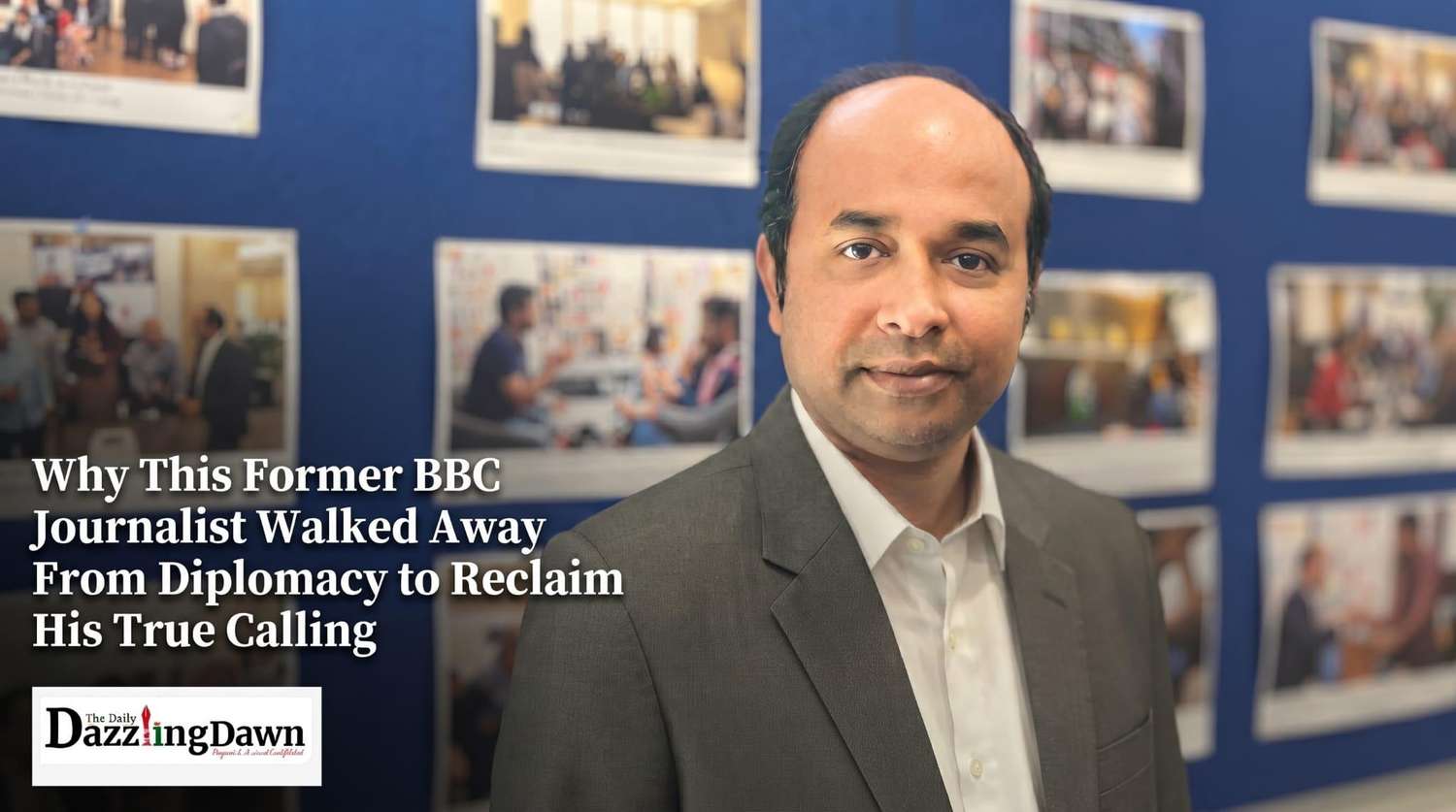
After a year in diplomatic service in Bangladesh High Commission in London, former BBC journalist Akbar Hossain has returned to the profession he knows best, building his own digital platforms to pursue independent journalism and political analysis.
For Akbar Hossain, journalism is more than a profession. It is where his experience, interests and passion converge. After spending nearly two decades working as a journalist with the BBC World Service in Dhaka, he took a different path in 2025, joining the Bangladesh High Commission in London as Minister (Press). But the diplomatic assignment did not offer the professional fulfilment he had hoped for.
Having served from April 2025 to April 2026, Hossain decided to leave the position before completing his two-year contractual tenure. The experience helped him recognise what he valued most in his professional life: the freedom to pursue journalism, investigate political developments and engage directly with audiences.
“I realised that journalism is where I belong,” is the sentiment that best captures his return to the profession.
“I missed asking questions, exploring different perspectives and making sense of the political developments shaping our lives,” he says.
Returning to His Roots
Hossain's career in journalism began long before his diplomatic appointment. He worked at The Daily Star between 2003 and 2005 before joining the BBC World Service's Dhaka Bureau in October 2005. Over nearly 20 years, he developed extensive experience covering Bangladesh's politics, governance and international relations.
Journalism offered him opportunities to ask difficult questions, examine competing perspectives and explain complex developments to a wider audience. It was a professional environment in which curiosity and independent thinking were essential.
His experience in London, however, exposed him to a different working culture. He found the work less engaging than he had anticipated and felt that the traditional approach to press and public communication within Bangladesh's diplomatic missions did not match his own professional interests.
Rather than continuing in a role that offered limited satisfaction, he chose to return to the field in which he had built his career.
“I have always enjoyed the process of journalism—the research, the conversations, the interviews and the challenge of understanding what lies beneath the surface. I realized that I would rather spend my time doing work that genuinely interests me than remain in a position simply for a job,” he says.
Building an Independent Digital Voice
After leaving diplomatic service, Hossain established his own digital media presence across Facebook, YouTube, Instagram and TikTok. These platforms have become the foundation of his independent journalism, allowing him to communicate directly with audiences without relying exclusively on traditional media organisations.
His work focuses primarily on Bangladesh's political affairs, regional geopolitics and international developments. Alongside political analysis, he conducts interviews with individuals who can offer insight into important public issues. He also appears regularly on television talk shows, providing commentary on current affairs.
For Hossain, digital journalism offers both creative freedom and new opportunities to engage with the public. Social media enables him to explore issues in greater depth, respond to unfolding events and develop a direct relationship with his audience.
His background at the BBC provides a foundation for this work, while his independent platforms give him greater control over the subjects he covers and the perspectives he explores.
Within just six months, Akbar’s digital platforms have reached a professional audience in Bangladesh, including policymakers and influential opinion-makers.
He does not produce content every day simply to maintain a regular posting schedule. Instead, he prioritizes issues that deserve thoughtful, in-depth analysis and meaningful public discussion.
“My primary objective is to build trustworthy social media platforms that people can rely on for credible, authentic and fact-based journalism—platforms that are free from rumors, personal attacks and political bashing. I believe that journalism should inform people, encourage critical thinking and contribute to a more informed public debate,” he says.
Journalism as a Personal Mission
Hossain's professional journey reflects a broader shift in the media landscape, where experienced journalists are increasingly exploring independent digital platforms to reach audiences directly.
For him, the transition is not simply a change of workplace. It represents a return to a profession that aligns more closely with his interests and ambitions.
As Bangladesh navigates political change and confronts complex regional and international challenges, Hossain intends to continue examining the forces shaping the country and its place in the world.
Returning to journalism, Akbar has made his choice. His next chapter is about building an independent voice, asking questions and helping audiences make sense of an increasingly complicated political world.


.jpeg)