






.svg)
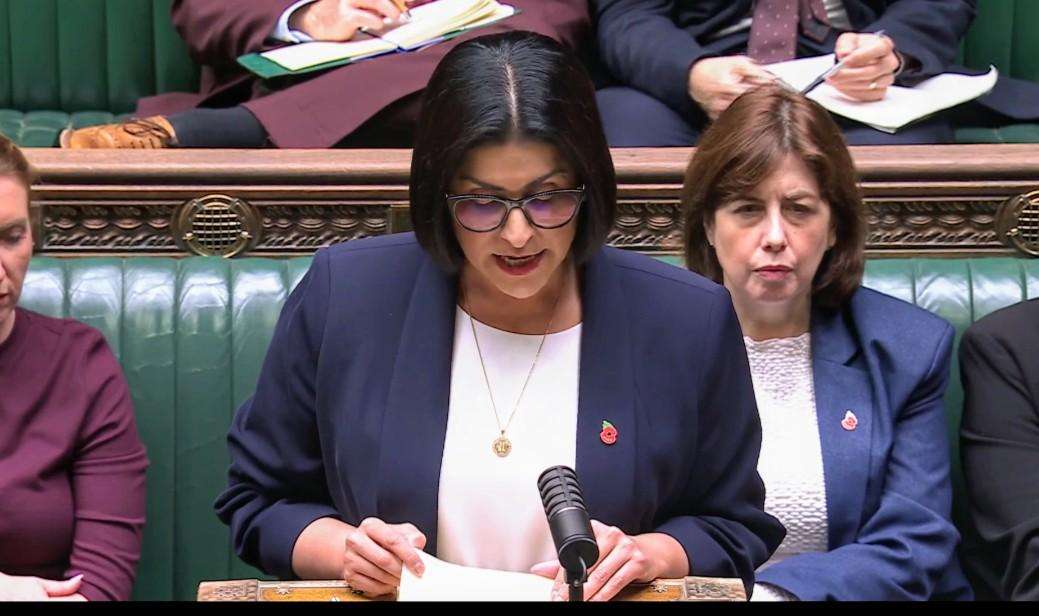
Home Secretary Shabana Mahmood has enforced a retrospective 10-year Indefinite Leave to Remain (ILR) qualifying wait on 500,000 legal skilled workers in the United Kingdom following a House of Commons statement in Westminster on 2 November 2026. While the Home Office spared 300,000 pre-May 2025 care workers by retaining their five-year pathway, tax-paying families across private sectors earning under £50,271 now face up to £25,000 in additional visa renewal costs and a 25-year age cap on dependent children. The policy shift, introduced under Prime Minister Andy Burnham's administration ahead of a December 2026 rules update, comes despite 84% opposition in the government's own public consultation and threats from Reform UK leader Nigel Farage to strip future citizenship.
The core contradiction of the Earned Settlement framework lies in its selective exemption of health and social care staff while penalising the wider skilled workforce. Daily Dazzling Dawn understands that the Confederation of British Industry (CBI) has questioned the entire rationale of the government's reform package following Monday's announcement. Matthew Percival, Future of Work Director at the CBI, told to journalists that while recognising the contribution of care staff is welcome, carving out the health and social care sector removes the primary demographic driver that the Home Office originally cited to justify the 10-year rule.
Whitehall data confirms that while 196,000 care workers and 186,000 dependants who arrived before May 2025 on salaries of at least £25,000 will retain their five-year pathway, approximately 146,000 Skilled Worker visa holders and 85,000 dependants across technology, manufacturing, engineering, and hospitality have been locked into a 10-year baseline. Because these private-sector employees earn below the higher-rate tax threshold of £50,271, they are excluded from the five-year route granted to public-sector teachers and medical professionals. For hundreds of thousands of legal residents who relocated to Britain between 2021 and 2022 under explicit statutory rules promising permanent residency after five years, the Selective Carve-Out creates an arbitrary two-tier immigration system.
The human and financial cost of doubling the settlement timeline falls directly on tax-paying households who are mere months away from completing their initial five-year residency. Instead of submitting a single £2,885 settlement application, an individual skilled worker must now fund two extra visa extension cycles, incurring more than £8,000 in combined £1,500 application fees and the £1,035 annual Immigration Health Surcharge. For a family of four, Daily Dazzling Dawn learned that the cumulative financial burden reaches £25,000 out of pocket, alongside £5,000 in mandatory Immigration Skills Charges levied on their British employers.
Beyond the immediate financial drain, the abolition of the 10-year long-residence route means that time spent on Student, Graduate, and Temporary Worker visas no longer counts toward permanent residency. International graduates who completed six years of higher education and post-study work before spending two years on a Skilled Worker visa now see their remaining wait extended from three years to eight years, consuming 16 years of their working lives in temporary status. Under the newly published consultation response, the Home Office has also introduced a strict "best years" earnings assessment requiring standard 10-year applicants to earn above £12,571 in taxable income—or £25,142 as a combined household—in five of the seven years prior to settlement, while discounting statutory National Insurance credits accrued by mothers on Child Benefit during maternity leave.
The newly released technical annex exposes severe structural risks for families whose settlement timelines have been doubled from five to 10 years. While child dependants aged between 18 and 24 will be permitted to settle alongside their parents, any dependent child who reaches the age of 25 before their parents qualify for ILR will be stripped of family dependant status and forced to qualify independently or leave the country. Furthermore, under mandatory suitability minimums, every applicant must possess a literally spotless criminal record; unlike current thresholds involving custodial sentences, even a minor police caution or an absolute discharge will trigger automatic refusal of settlement.
Any accidental breach of immigration conditions or brief historical overstaying will automatically lock an applicant into a non-reducible 20-year qualifying route, matching the timeline imposed on individuals who claim public funds. Although employees whose sponsors lose their licences after 1 February 2027 will receive 120 days to secure a new job offer and 60 days to resolve their visa status, doubling the qualifying period to a decade exposes skilled workers to ten full years of employer dependency, career stagnation, and mortgage exclusions.
The Home Office's decision to penalise 500,000 skilled workers contradicts both macroeconomic evidence and the findings of its own eight-month public consultation. While Home Office Minister Anna Turley told to journalists that the revised plans would save at least £1 billion in welfare spending over the next two years, research by the Institute for Public Policy Research (IPPR) demonstrates that migrant cohorts scheduled to settle between 2026 and 2030 will generate a £115 billion net addition to United Kingdom public finances. Marley Morris, Associate Director at the IPPR, noted that political fixation on lifetime state costs ignores the substantial tax and National Insurance contributions paid by working-age visa holders.
Furthermore, analysis of the 204,667 official consultation responses reveals that the British public overwhelmingly rejected the government's retrospective crackdown. Daily Dazzling Dawn understands that 84% of individual respondents, 79% of organisations, 86% of current visa holders, and 77% of British citizens who participated in the consultation opposed extending the qualifying timelines. Even on the global stage, the hypocrisy of restricting skilled mobility was highlighted at the Commonwealth Heads of Government Meeting in Osbourn, Antigua, where Australian Prime Minister Anthony Albanese pressed Prime Minister Andy Burnham over 87,000 British nationals working in Sydney and Bondi Beach without rural work obligations while fewer than 10,000 Australians relocated to Britain.
Despite Prime Minister Burnham holding a commanding polling lead over a divided opposition, the government's concession to anti-migration rhetoric has failed to appease Reform UK. Speaking at a Westminster press conference alongside party spokesman Zia Yusuf, Nigel Farage branded the revised framework a betrayal of Brexit voters and pledged that a future Reform government would replace ILR with renewable five-year visas, extend the citizenship wait to 10 years, and review every grant of permanent residency or citizenship issued under the current scheme. "Shabana Mahmood has shown her true colours: she talked a big game on immigration but has U-turned at the first sign of trouble from her left-wing Labour colleagues," Farage told to journalists, adding that mass migration was filling the country with cheap labour.
For legal migrants caught between Labour's 10-year rule and Reform UK's threat of retroactive citizenship deprivation, the High Court remains the primary avenue of defence. Legal experts note that mass revocation of nationality is barred by the British Nationality Act 1981 and the 1961 Convention on the Reduction of Statelessness. Meanwhile, public law barristers are preparing Judicial Review claims against the December 2026 Statement of Changes, citing the doctrine of substantive legitimate expectation established in R (HSMP Forum Ltd) v SSHD [2008] EWHC 664 (Admin) to argue that Britain cannot lawfully strip five years of life and tens of thousands of pounds from half a million workers who played entirely by the rules.


.jpg)