






.svg)
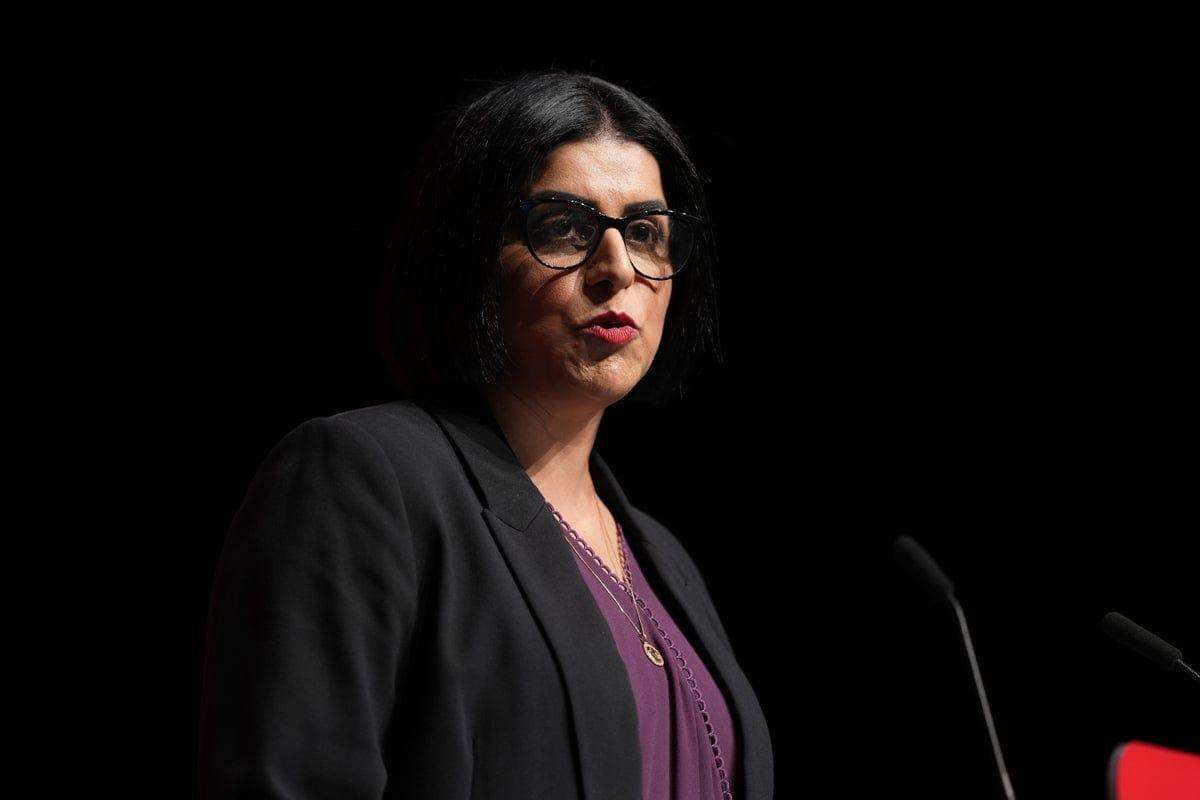
Home Secretary Shabana Mahmood will stand before the House of Commons in Westminster next week to unveil the UK government's final Indefinite Leave to Remain (ILR) overhaul, determining whether up to 1.6 million legal migrants qualify for permanent residency after five, 10, or 15 years. Speaking to Daily Dazzling Dawn, Whitehall officials confirmed that while overseas social care workers already residing in Britain will retain their five-year pathway, negotiations between Downing Street, the Treasury, and the Home Office are finalising transitional rules for skilled workers and spouses ahead of the February 2027 deadline.
The statutory reform seeks to manage long-term public spending while avoiding a Judicial Review at the Royal Courts of Justice and resolving a Cabinet dispute inside Prime Minister Andy Burnham's administration.
The Year-Four Financial Trap and Sponsor Licence Revocations- For tens of thousands of Skilled Worker and Spouse visa holders who entered the United Kingdom between 2021 and 2022, the five-year threshold is less than 12 months away. These residents completed their initial three-year or 33-month visa grants and paid thousands of pounds a year ago for their first extension under the statutory expectation that their next application would secure permanent residency. Daily Dazzling Dawn understands that applying the 10-year rule retroactively without transitional protection would force single applicants to forfeit a one-off £2,885 settlement fee and instead fund two extra extension cycles costing over £8,000, including the £1,035 annual Immigration Health Surcharge and £1,500 renewal fees, rising to £25,000 for a family of four alongside £5,000 in employer Immigration Skills Charges. Furthermore, graduates who spent six years on Student and Graduate visas before completing two years on a Skilled Worker route would see their remaining wait jump from three years to eight years—totalling 16 years of temporary residence—as the Home Office moves to abolish the existing 10-year long-residence route and add 10-to-20-year penalties for benefits claims or minor immigration breaches.
The vulnerability is compounded for migrant workers whose employers lost their Home Office sponsor licences during UK Visas and Immigration compliance crackdowns between 2024 and October 2026. When a licence is revoked, innocent staff have their visas curtailed to 60 calendar days to secure a new licensed sponsor, obtain a fresh Certificate of Sponsorship, and apply at higher salary thresholds. Under Appendix Continuous Residence, submitting a valid application within 60 days preserves a worker's settlement clock. However, legal practitioners told to journalists that extending the qualifying threshold to 10 years doubles the window during which a second employer could become insolvent or lose its licence on the date of the settlement decision, triggering an automatic refusal.
High Court Precedents, Judicial Review Timelines, and Human Rights Law- Public law barristers have warned ministers that failing to include grandfathering clauses in the upcoming Statement of Changes in Immigration Rules will prompt an immediate Judicial Review in the Upper Tribunal and the High Court Administrative Court. Claimants will rely on R (HSMP Forum Ltd) v Secretary of State for the Home Department [2008] EWHC 664 (Admin), in which Sir George Newman ruled that the Labour government acted unlawfully when it retroactively extended the Highly Skilled Migrant Programme settlement wait from four years to five years, breaching migrants' substantive legitimate expectation and forcing fee refunds. While Government Legal Department barristers cite Odelola v SSHD [2009] UKHL 25 to argue that rule changes apply to undecided applications, claimants are supported by Supreme Court and Court of Appeal rulings in R (Alvi) v SSHD [2012] UKSC 33, R (Munir) v SSHD [2012] UKSC 32, and Pankina v SSHD [2010] EWCA Civ 719, which mandate parliamentary scrutiny and constitutional fairness.
Securing a High Court quashing order requires serving a Pre-Action Protocol letter within three months with a 14-to-21-day Home Office reply window, followed by a two-to-four-month permission stage and a substantive judgment taking nine to 14 months—or up to 24 months if appealed—unless rare emergency interim relief is granted within 14 days on Form N463.
During litigation, applicants whose visas expire must pay to extend their leave under Section 3C of the Immigration Act 1971. Because petitioning the European Court of Human Rights in Strasbourg under Article 35 takes an additional two to four years after exhausting domestic courts, organisations including Liberty, the Joint Council for the Welfare of Immigrants, the Public Law Project, and the European Human Rights Advocacy Centre can intervene directly in the UK High Court under the Human Rights Act 1998. Following Balajigari v SSHD [2019] EWCA Civ 673 and Saleh Ahmed Handule Ali [2024] EWCA Civ 372, lawyers will argue that decades of temporary status breach Article 8 right to private and family life—alongside the codified seven-year child settlement rule under Appendix FM—as well as Article 14 non-discrimination rules and Article 1 of Protocol 1 property protections.
The political environment has shifted markedly since the consultation opened in November 2025 under former Prime Minister Keir Starmer. Following Andy Burnham's assumption of the premiership on 20 July 2026, pressure from the political right has receded. On 28 October 2026, activist Tommy Robinson, whose legal name is Stephen Yaxley-Lennon, was convicted at Southwark Crown Court of harassing Daily Mail journalists Andrew Young and Jacob Dirnhuber and threatening former editor-in-chief Ted Verity following a legal defence funded by Elon Musk, leaving him facing up to 10 years in prison at his sentencing on 16 December 2026. Simultaneously, Ipsos polling from 15 to 22 October 2026 places Labour eight points ahead on 32%, with the Conservatives on 24% and Reform UK dropping to third on 20%. Opinium data from 21 to 23 October 2026 puts Labour on 30% and Reform on 22%, while Nigel Farage holds a -28 net approval rating (-36 on economic trust) and trails Burnham 41% to 21% as best Prime Minister, alongside a -42 net favourability score in YouGov's 20 October tracker and an 83% Electoral Calculus projection for a Labour majority.
Inside Whitehall, Daily Dazzling Dawn learned that Mahmood—supported by Justice Secretary Alex Norris, Cabinet Office Minister Pat McFadden, and Treasury officials after Chancellor John Healey's 28 October Autumn Budget—points to projections that care workers settling between 2026 and 2030 could cost £10 billion in lifetime benefits, even as Conservative Shadow Home Secretary Chris Philp accused ministers of surrendering to the left. Conversely, Housing Secretary Angela Rayner called retroactive rules un-British and demanded unseen Home Office homelessness data on 30 October, joined by Energy Secretary Miatta Fahnbulleh, Work and Pensions Minister Alison McGovern, Unison General Secretary Andrea Egan, and over 100 Labour MPs. Testifying to the Home Affairs Select Committee on 15 September 2026 after reviewing 200,000 consultation responses, Mahmood—a former barrister and Birmingham Ladywood MP who outlined her Blue Labour contribution philosophy at the IPPR on 5 March 2026—confirmed that options include passporting existing cohorts on the five-year route or assessing household-level tax contributions. Having scrapped the national digital ID scheme and prioritised a National Care Service where 150,000 vacancies remain fragile, Burnham is set to enforce a two-tier settlement deal: locking in Mahmood's 10- and 15-year baselines for future arrivals while extending five-year transitional protections to existing care workers and advanced visa holders.