


.jpg)
.svg)
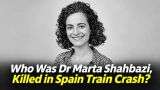
Dr Marta Shahbazi Alonso was a 41-year-old Cambridge University molecular biologist and mother of two who was killed when the Renfe AVE high-speed train she was travelling on collided with a stationary Iryo service near Urda in Toledo province on Wednesday, October 28. Daily Dazzling Dawn understands the collision occurred shortly before 9am local time, approximately 150 kilometres south of Madrid, derailing carriages and scattering wreckage beside the tracks. The confirmed death toll has reached 69, with dozens more injured passengers remaining in hospital, some requiring intensive care.
Dr Shahbazi led a research group at the MRC Laboratory of Molecular Biology in Cambridge and was associated with the Cambridge Stem Cell Institute. She had been travelling to the 19th meeting of the Spanish Society for Developmental Biology in El Rompido, Huelva, where she was due to receive the José Luis Gómez-Skarmeta Award in recognition of her contributions to understanding the earliest stages of human embryonic development. She was travelling in carriage eight of the Renfe train, one of the sections most severely affected by the impact.
Her family spent several days desperately searching for information about her whereabouts before receiving confirmation of her death on Saturday night. Her brother Carlos Shahbazi, a mathematics researcher, had spoken publicly about the family's anguish while she remained missing, describing his sister to Spanish newspaper El País as a warm, affectionate and cheerful person who worked tirelessly. He said the family was holding on to a final hope that she might still be found alive.
The Centre for Research in Molecular Medicine and Chronic Diseases at the University of Santiago de Compostela issued a tribute after receiving confirmation, describing Dr Shahbazi as an outstanding young researcher. The institute expressed its condolences to her aunt, María José Alonso, who is also a scientist. The town council of Carrizo de la Ribera in León, where Dr Shahbazi had family roots through her mother's side, also confirmed her death and paid tribute to her scientific achievements.
Dr Shahbazi had travelled to Spain from Cambridge and had visited relatives in Madrid before beginning her journey south. Her husband, Mirco Petruzzelli, and their two children, Alma, seven, and Dario, three, had been expected to meet her near the coast in southern Spain after the scientific event. Instead, the family has been left mourning the loss of a mother whose professional achievements had earned international recognition.
Her death was confirmed alongside that of another Spanish scientist, Tamara González Costa, 31, who came from Bembibre in the León region and worked at the Institute of Molecular Biotechnology in Vienna, Austria. She had also been travelling to the developmental biology conference in Huelva. Both scientists were aboard the Renfe train involved in the collision. Their deaths have been mourned by colleagues and scientific institutions, with the accident claiming the lives of researchers whose work had taken them to leading European laboratories.
Transport Minister Óscar Puente said the collision followed a signalling-system failure that caused trains in the area to stop. According to the minister's initial account, the Renfe train was subsequently authorised to continue despite the Iryo service remaining stationary on the track ahead. The Renfe train travelled approximately 25 kilometres before colliding with the other service. Investigators are examining why the train was permitted to resume its journey and whether errors in the management of the signalling failure contributed to the crash. The transport minister described the sequence of events as difficult to explain but stressed that responsibility had not yet been formally established. A judicial investigation and a separate technical inquiry are examining the circumstances, and no final determination of the cause has been announced.
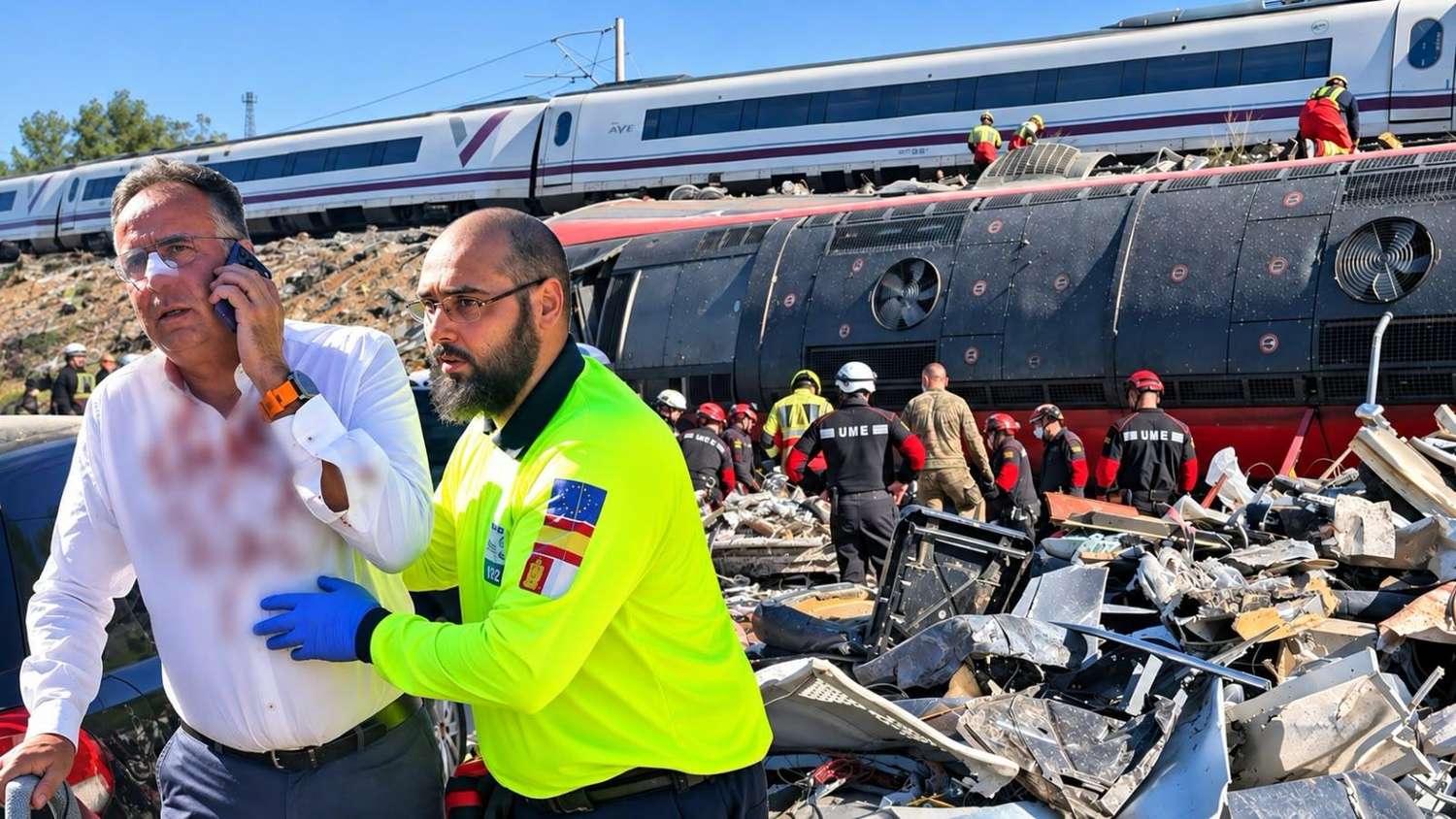
Spanish Prime Minister Pedro Sánchez declared three days of national mourning following the disaster. King Felipe VI and Queen Letizia visited injured passengers and their relatives in Toledo, expressing condolences and thanking emergency personnel for their work. Emergency responders arrived to find badly damaged carriages, with some sections of the trains thrown off the tracks. Firefighters, paramedics, police and military personnel were deployed as rescue teams worked to reach passengers trapped inside the wreckage. Heavy lifting equipment was brought to the site to help move damaged carriages and allow investigators and emergency workers to examine the debris. Specialist forensic teams worked with police to establish the identities of those killed, using fingerprints and DNA analysis where necessary.
The disaster came just months after another fatal high-speed train collision in Spain, increasing scrutiny of railway safety and operational procedures. Rail workers and unions have raised concerns about safety arrangements, while the Government has promised a thorough investigation.
Dr Shahbazi's research focused on how cells organise themselves during the first stages of embryonic development. Working with stem-cell models, she investigated processes that help explain how a human embryo develops its initial structure. Such research contributes to scientists' understanding of developmental biology and may provide insights relevant to reproductive medicine and conditions affecting early development. At the MRC Laboratory of Molecular Biology, she led her own research group and worked alongside scientists studying fundamental biological processes. Her work had established her as a respected figure in an internationally competitive field, and the award she was travelling to collect reflected the importance of her contributions to developmental biology.
Daily Dazzling Dawn understands tributes have been paid by institutions in Spain and the United Kingdom, where she had built her scientific career. The MRC Laboratory of Molecular Biology and the wider Cambridge research community have lost a respected colleague, while her husband and two young children face the loss of a wife and mother. As investigations into the disaster continue, tributes to Dr Shahbazi have highlighted both her scientific accomplishments and the personal loss suffered by those closest to her.





.jpg)