






.svg)
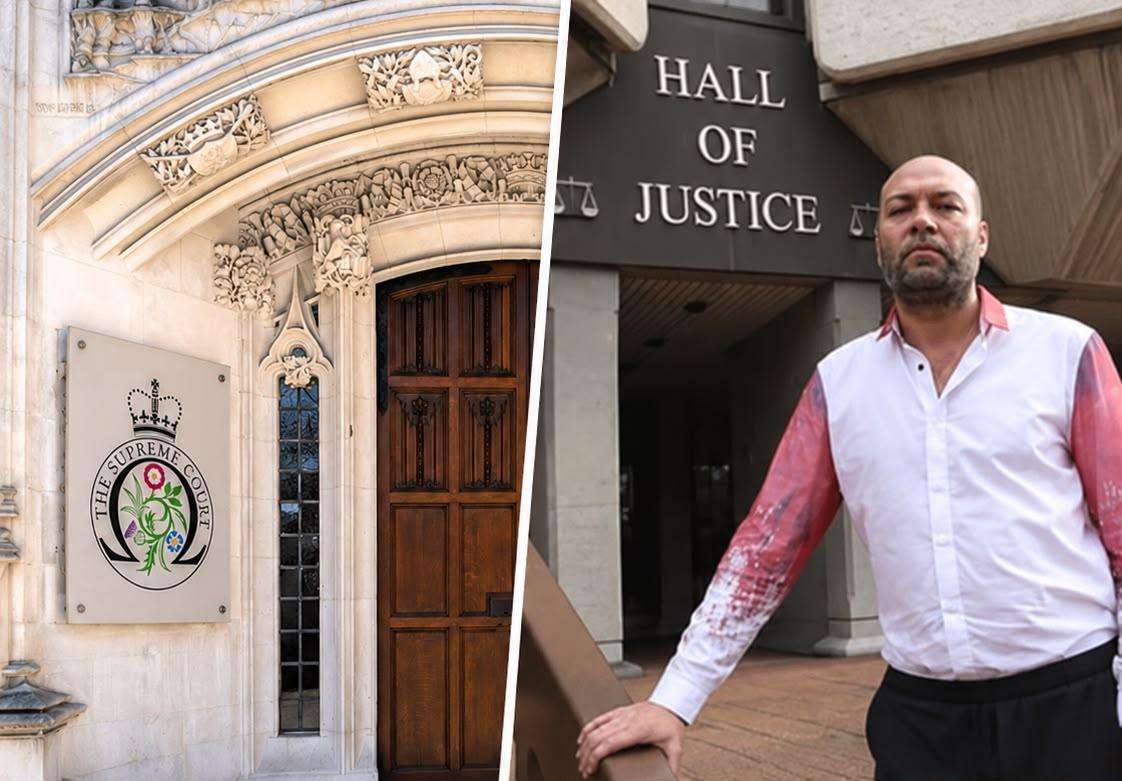
A jury at the Central Criminal Court in Limerick has convicted Hasan Ali Gori, a 52-year-old native of Chad, of murdering his girlfriend’s mother, Josephine ‘Josie’ Ray, an 89-year-old mother of five, at her home in Nenagh, County Tipperary. The verdict, returned by a majority of 11 to 1 on Tuesday afternoon, followed a three-week trial and nearly nine hours of deliberation. Gori showed no reaction as the guilty verdict was read out shortly after 2pm. Daily Dazzling Dawn understands the mandatory life sentence will be handed down by Mr Justice Seán Gillane later today.
The court heard that Josephine Ray, known locally as Josie, was a sprightly and formidable pensioner who had lived and raised her family at St Joseph’s Park in Nenagh since the 1980s. She was discovered dead in her bed in the front room of her home on 4 August 2024. Gori, who had been living at the property and was in a relationship with Ms Ray’s daughter, Mary, had denied the charge of murder throughout the proceedings.
"Hurt and Devastated": Chloe Mitchell's Family Speak Out After Murder Trial Jury Discharged
The jury of nine men and three women deliberated for a total of eight hours and fifty-two minutes over four days before reaching their decision. Mr Justice Gillane excused them from jury service for ten years, thanking them for the “care” they brought to their “very very difficult work” and describing their service as “fundamental to democracy.”
State Pathologist Dr Yvonne McCartney told the court that Ms Ray died of strangulation and smothering. The post-mortem examination revealed the great-grandmother sustained two broken bones in her neck and was covered in 44 separate bruises to her head, neck, face, shoulders, chest, arms, and legs.
The forensic narrative proved pivotal. Senior prosecuting counsel Lorcan Connolly told the jury that Ms Ray’s arms were found upright by her face, describing the position as consistent with a desperate struggle. “Josie Ray didn’t go down without a fight,” Mr Connolly told the court. He argued that bruising to her forearms was evidence of her attempting to fight off her attacker as he strangled her.
Crucially, DNA samples taken from under Ms Ray’s fingernails matched Gori’s DNA profile. “Unbeknownst to himself, Hasan Ali Gori left his calling card, his DNA under Josie’s fingernails,” Mr Connolly said, adding that the forensic evidence was consistent with a close physical struggle. Daily Dazzling Dawn understands this DNA evidence was central to the prosecution’s case that Gori was the assailant.
The prosecution case was built on a clear motive: Gori murdered his girlfriend’s mother because he was at risk of losing his accommodation and financial lifeline. The trial heard that Gori had been living in a hostel before he struck up a relationship with Mary Ray, who has an intellectual disability and was described as a “vulnerable” adult.
Prosecuting counsel Connolly told the jury that Gori “got lucky” when he began the relationship with Mary Ray. She provided him with a roof over his head, a bed, and €154 a week through her disability allowance. However, Tipperary County Council was closing in because Gori was not a registered tenant of the property. The prosecution argued that his financial and accommodation lifeline was “on the hook,” giving him a direct motive to eliminate Ms Ray, who had not approved of the relationship.
The court also heard that gardaí had previously attended the Ray household following complaints from neighbours about constant rowing at the property. On the night before the murder, neighbours reported seeing Gori head-butting Mary Ray and telling her he was “sick” of living with her mother, stating that either he or Josie Ray would have to leave the house. Connolly argued that Gori had both the “motive” and the “opportunity” to murder Josie Ray.
Gori’s defence, led by senior counsel Aidan Doyle, sought to cast doubt on the prosecution’s case by questioning the investigation’s focus. Doyle highlighted that a former neighbour had told the court that Josie and Mary Ray were “constantly rowing before Gori came on the scene.” The neighbour also claimed to have seen Mary Ray threaten her mother with a knife nine years previously.
The defence further called Carmel Ray, a sister of Mary Ray, who told the court that Mary was “very kind, and shy” but sometimes “couldn’t control her emotions.” Carmel Ray claimed Mary had assaulted another sibling during her teenage years and that on one occasion it took five gardaí to restrain her. Doyle put it directly to the jury: “If you think it’s even possible that Mary did it, you have to acquit (Gori).” The jury ultimately rejected this argument.
The trial has laid bare the vulnerability of Josephine Ray in her final years, caring for her daughter Mary, whom she rarely let out of her sight. The court heard that Ms Ray was a devoted mother who had raised five children and was well known and respected in her community. Her death, characterised by a violent struggle against an attacker in her own bed, has deeply affected her family and neighbours in Nenagh.
Daily Dazzling Dawn notes that the court will now proceed to hear victim impact statements from the Ray family before Mr Justice Gillane imposes the mandatory life sentence for murder. The case has highlighted the devastating consequences of domestic volatility and the profound vulnerability of elderly people in their own homes.
Gori, who had been remanded in custody throughout the trial, now faces a life sentence for murdering his girlfriend’s mother — a woman who, the prosecution successfully argued, he killed to secure his own accommodation and financial position.


.jpg)


.jpg)