




.svg)
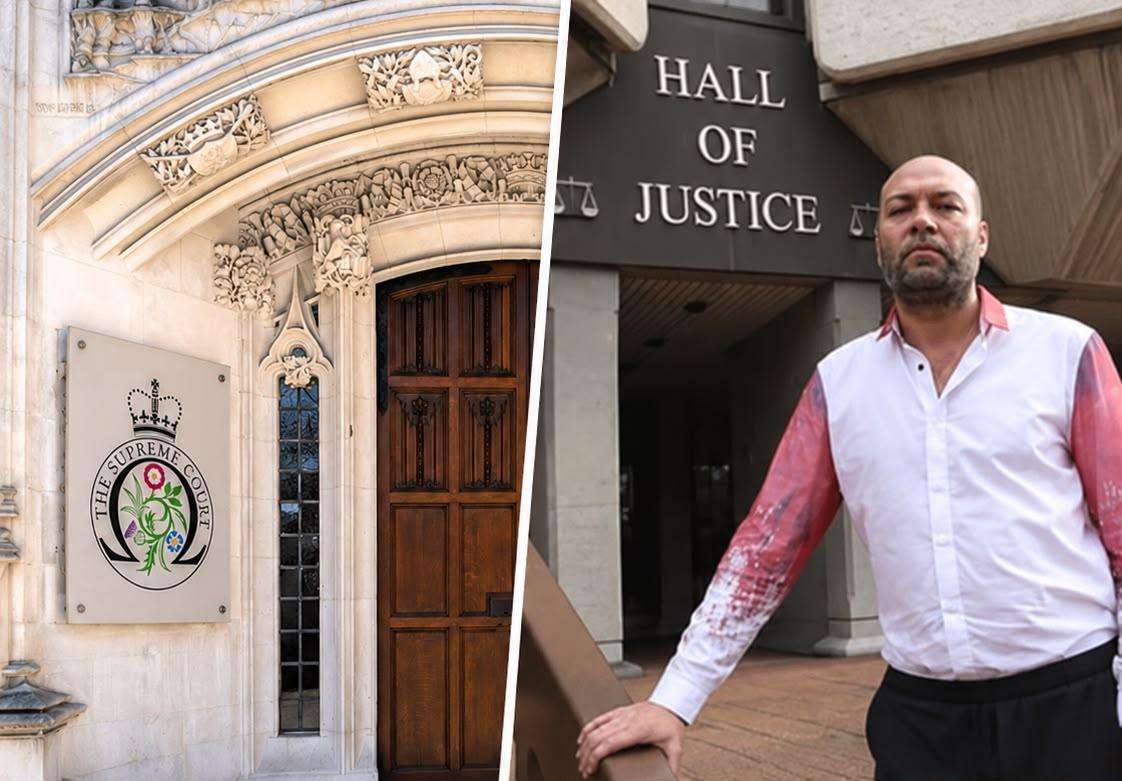
Trinidad and Tobago’s law criminalising consensual sexual relations between male same-sex couples has been definitively struck down by a London court, marking a pivotal moment for constitutional rights in the Caribbean. The Judicial Committee of the Privy Council, the final court of appeal for the twin-island republic and several other Commonwealth nations, ruled on Tuesday that the nation’s Sexual Offences Act breaches fundamental human rights protections. The verdict, delivered in London, brings an end to a near-decade-long legal battle spearheaded by gay rights activist Jason Jones, who argued that the legislation violated his constitutional right to privacy and family life.
The decision was announced by Judge Philip Sales, who stated that the current understanding of fundamental individual rights includes the protection of sexual orientation as a core part of human identity. "Laws which seek to criminalise such activities cannot be justified," Judge Sales declared as the court delivered its judgment. The ruling reverses a previous decision by the Trinidadian Court of Appeal and reinstates the initial 2018 High Court victory secured by Mr Jones, effectively decriminalising homosexuality in the nation.
The case, which was originally filed in February 2017, has traversed multiple judicial tiers, reflecting the deeply entrenched nature of colonial-era legislation in the region. Jason Jones, who was born in Trinidad and Tobago but left in 1996 due to what he described as homophobic violence and discrimination, challenged the Sexual Offences Act as a direct breach of his fundamental rights under the country’s constitution. While the High Court of Trinidad and Tobago initially ruled in his favour in April 2018, finding the laws unconstitutional, a local appeals court partially reversed that decision in March 2025. This reversal prompted Mr Jones to escalate the matter to the Privy Council four months later.
Daily Dazzling Dawn understands that the case has been closely monitored by activists across the Caribbean, who view it as a bellwether for regional human rights standards. The Privy Council’s ruling serves as a binding precedent for Trinidad and Tobago, which, despite being an independent republic within the British Commonwealth, retains the London-based court as its highest appellate authority. The verdict underscores the ongoing tension between local legislative sovereignty and international human rights norms, particularly regarding the legacy of British colonial laws that criminalised same-sex intimacy.
The ruling places Trinidad and Tobago alongside a growing list of Caribbean nations that have recently reformed their laws. In recent years, judges in Barbados, Dominica, St. Lucia, and Antigua and Barbuda have struck down similar colonial-era statutes. The Bahamas decriminalised homosexuality in 1991, while the UK government repealed such laws in several overseas territories, including Anguilla, the British Virgin Islands, the Cayman Islands, Montserrat, and the Turks and Caicos Islands, in 2001. However, gay sex remains a crime in several other former British colonies in the region, including Grenada, Jamaica, St. Vincent, and the Grenadines.
The judgment has significant implications for the constitutional framework of Trinidad and Tobago. By affirming that the criminalisation of private, consensual sexual activity violates the right to respect for private and family life, the Privy Council has set a legal standard that may influence future litigation in other jurisdictions that retain similar laws. The court's reasoning emphasises that the protection of sexual orientation is integral to human identity, thereby rendering laws that seek to penalise such activities unjustifiable under constitutional law.
The social impact of the ruling extends beyond the courtroom, resonating with LGBT communities and human rights advocates who have long argued that such laws foster discrimination and violence. Mr Jones, who has battled for gay rights in Trinidad and Tobago for nearly a decade, described the legal journey as arduous but necessary. The case has been a focal point for activism in the region, drawing attention to the disconnect between constitutional guarantees of equality and the persistence of discriminatory legislation.
Daily Dazzling Dawn learned that the ruling is expected to catalyse further debate regarding the replacement of the Privy Council with the Caribbean Court of Justice (CCJ). The government of Trinidad and Tobago has previously pushed for the Port-of-Spain-based CCJ to become the final court of appeal, a move that would sever the final judicial link with London. This verdict, delivered by British judges, may intensify calls for judicial independence while simultaneously providing a definitive resolution to the constitutional challenge brought by Mr Jones.
As the news reverberates across the Caribbean, the focus now shifts to the implementation of the ruling and the broader societal reconciliation that must follow. The decriminalisation of same-sex relations in Trinidad and Tobago represents a significant victory for human rights, affirming that the dignity and privacy of all citizens are protected under the law. For the activists who have fought for this moment, the ruling signals a new chapter in the ongoing struggle for equality and social justice in the region.




.jpg)


.jpg)