




.svg)
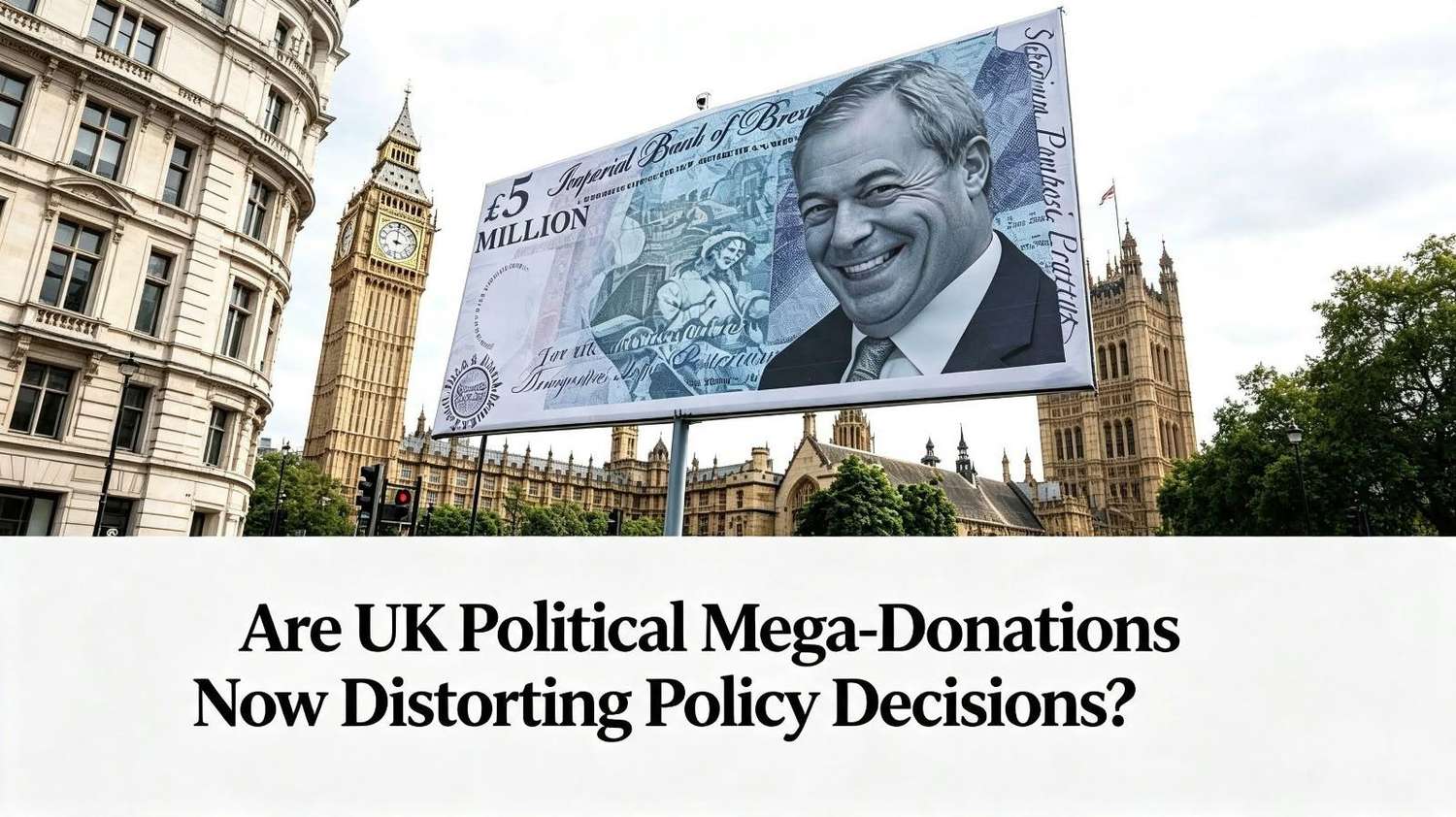
A dramatic concentration of private wealth is transforming British party political funding, with affluent donors injecting more than £179 million into Westminster coffers across the past two parliaments as Whitehall faces mounting pressure to overhaul electoral finance laws. Electoral Commission returns and independent institutional assessments reveal that the proportion of political funding originating from mega-donations—defined as single contributions of £1 million or more—has surged from just 1 per cent in 2015 to roughly 35 per cent in recent reporting cycles. With individual gifts reaching unprecedented tens of millions, campaign finance reformers and constitutional watchdogs warn that British electoral integrity is increasingly dependent on the financial muscle of a tiny cadre of ultra-wealthy individuals.
The scale of modern political backing reached historic heights following confirmed contributions of £36 million each to Reform UK from technology and cryptocurrency investors Christopher Harborne and Ben Delo, creating a record-breaking £72 million war chest that outstrips what either major governing party spent during the entirety of the 2024 general election campaign. Analysis of Electoral Commission disclosures indicates that multi-million-pound individual underwriting is no longer confined to traditional party structures. While the Conservative Party previously benefited from massive individual contributions—such as the £20 million delivered by healthcare technology executive Frank Hester alongside seven-figure gifts from hedge fund luminaries—Labour and minor parliamentary parties have similarly relied on multimillionaire benefactors, including Lord Sainsbury, to finance extensive campaign machinery.
Regulatory Scrutiny and the Retrospective Cap
The accelerating pace of private financing has triggered fierce scrutiny across Whitehall and Westminster. Ministers are now progressing the Representation of the People Bill, which seeks to place a strict £100,000 annual statutory cap on political contributions from overseas British citizens, bolstered by a 12-month domestic residency qualification to prevent donors from using nominal moves to bypass electoral thresholds. Daily Dazzling Dawn understands that senior civil servants are drafting provisions intended to apply retrospectively to gifts received after March 2026, creating potential legal obligations for parties to return large-scale overseas capital.
Daily Dazzling Dawn learned that senior Whitehall figures have simultaneously instructed parliamentary draughtsmen to examine permanent spending curbs on political campaigning outside official statutory election windows. Under existing legislative guidelines established under the Political Parties, Elections and Referendums Act 2000, national expenditure limits—presently capped at approximately £34 million in the twelve months preceding a general election—do not restrict party spending during intermediate parliamentary periods. Campaign finance directors told journalists that this statutory loophole permits well-funded operations to mount relentless, permanent digital advertising operations, mass-mailing drives, and nationwide public rallies without triggering formal accounting limits outside designated election campaigns.
Questions of Access and Policy Influence
The growing prevalence of multi-million-pound donations has provoked intense debate over whether extraordinary financial leverage dictates national policy priorities. Constitutional watchdogs, including Transparency International UK, have cautioned that access to senior political figures risks becoming transactional when individual gifts eclipse the combined contributions of tens of thousands of grassroots supporters. Public controversy intensified following regulatory inquiries by both the Parliamentary Commissioner for Standards and the Electoral Commission into undeclared personal gifts and the lobbying of regulatory bodies on sensitive fiscal matters, including central bank digital currency frameworks and corporate compliance structures.
Party treasurers defend private contributions as lawful exercises of democratic participation, arguing that stringent disclosure requirements ensure complete public transparency. Reform UK leadership has repeatedly asserted that all funds received strictly comply with statutory guidelines in place at the time of deposit, dismissing proposed retrospective rules as partisan measures designed by established factions to suppress insurgent political competitors.
Nevertheless, pressure is expanding across the House of Commons for a comprehensive, across-the-board donation ceiling applied to all individual donors, corporate bodies, and affiliated trade unions. As Parliament prepares to debate the full scope of electoral finance reform, MPs from across the political spectrum acknowledge that without decisive statutory intervention, the escalating financial arms race risks permanently subordinating constituency-driven campaigning to the checkbooks of high-net-worth financiers.



.jpg)