





.svg)
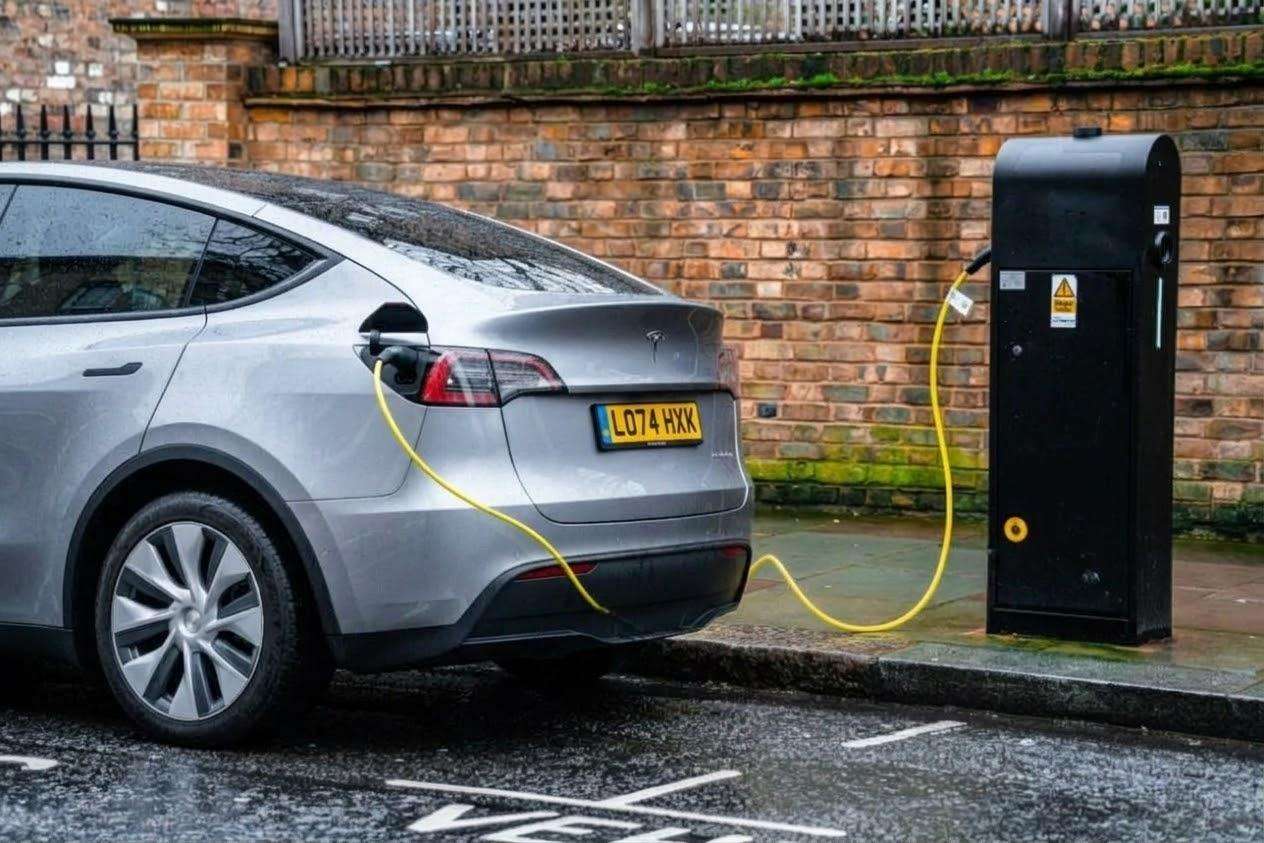
Millions of British motorists without dedicated driveways face an abrupt exclusion from charging electric cars outside their homes following an eleventh-hour regulatory overhaul scheduled to take effect on 21 October 2026. The statutory adjustments, updated in secondary planning legislation on 25 September, will prohibit the practice of trailing domestic charging cables across public footpaths while creating a formal pathway for local authorities to approve pavement-embedded cable channels. However, households located within England’s roughly 10,000 designated conservation areas have been explicitly carved out of the streamlined permitted development rights, leaving an estimated 3.5 million urban drivers stranded without practical access to affordable domestic electricity tariffs.
Under the statutory framework, residents occupying terraced homes or flats without off-street parking had anticipated automatic permissions to embed charging channels beneath pedestrian pavements and install compact wall-mounted charging units on exterior front walls. While suburban homeowners outside protected enclaves gain the legal right to commission street-level infrastructure by the end of October, those residing in historic boroughs and conservation areas must now navigate individual, full planning applications before executing any installation.
The sudden exclusion has provoked widespread frustration among urban motorists transitioning towards electric vehicles ahead of national zero-emission vehicle mandates. Because conservation areas encompass vast swathes of central London, Manchester, Bristol, Bath, and historic market towns where on-street parking is standard, motorists argue the carve-out creates a stark geographical divide. Installing an approved cross-pavement gully typically costs several hundred pounds, but requiring bespoke planning applications introduces hundreds of pounds in statutory administrative fees and delays running into months.
Defending the decision, central government officials insist that heritage safeguards must remain robust even as national charging capacity expands. A government spokesperson, in remarks reviewed by Daily Dazzling Dawn, stated that while ministers remain committed to helping households lacking private driveways access convenient home electricity rates, preserving the architectural character of historic streetscapes remains essential. Officials emphasised that motorists living in sensitive heritage zones retain the legal right to apply for formal planning consent, and noted that local authorities hold existing statutory powers to issue blanket neighbourhood permissions should elected councillors deem the infrastructure visually acceptable.
The policy shift stems from an extensive consultation exercise conducted by the Department for Transport and the Department for Levelling Up, Housing and Communities. Motorists and disability advocacy organisations widely agreed that running loose, unshielded high-voltage power cables across public pavements poses a critical tripping hazard to pedestrians, particularly visually impaired individuals, wheelchair users, and parents pushing prams. Pavement-embedded gullies, which sink the vehicle charging lead flush into a discreet metal or polymer channel in the pavement flags, were introduced as the compromise standard to replace trailing cords.
The practical consequences of the regulatory bifurcation fall heavily on drivers dependent on public charging hubs. Daily Dazzling Dawn understands that motorists forced onto rapid commercial kerbside points face electricity tariffs up to four times higher than domestic overnight energy rates, compounding the total cost of ownership for residents of listed terraces. Although the revised legislation allows wall-mounted chargers on front elevations in standard residential areas, properties in conservation settings and listed buildings remain strictly bound by heritage consent rules.
Motoring organisations and urban clean-air groups warn that creating complex planning friction in densely populated town centres risks stalling electric car adoption across major metropolitan areas. With the 21 October enforcement date approaching swiftly, municipal councils across England now face immediate pressure from local residents to enact area-wide development orders to prevent millions of prospective EV buyers from abandoning the transition altogether.